BePrepared.com is brought to you by...


Order History >>
 View Cart - 0 items

Place Orders Toll-Free
1-800-999-1863
  Enter a Keyword or Item #:


Enter an Item #:


Order Multiple Items »   

 • Freeze Dried in Pouches

• Freeze Dried Foods In #10 Cans

• Superpails

• Dehydrated Food Storage in Cans

• Provident Pantry® Freeze Dried Food in Cans

• MRE (Meals Ready to Eat)

• Build Your Own First Aid Kit


Food Storage
  • Food Storage - Year Supply Units
  • Food Storage - Freeze Dried Foods
  • Food Storage - Dehydrated & Dry Foods
  • MRE (Meals Ready to Eat)
  • Food Storage Containers
  • Kitchen Processing Items
  • Water Storage and Accessories
Emergency Kits
and Components
  • Emergency Power and Chargers
  • First Aid
  • Build Your Own First Aid Kit
  • Preparedness Education
  • Radios and Communication
  • Sanitation & Hygiene
  • Tools and Knives
  • Warmth & Coverings
  • Water Filters, Purifiers, and Accessories
Camping Preparedness
  • Shelter
  • Navigation Equipment
  • Cooking Stoves and Accessories
  Valuable information on how to prepare for emergencies, build your food storage and much more.
Click Here
 

  Help turn your food storage program into a lifestyle and provide a great way to rotate and replenish your foods. Click Here


Get Special Offers from
Emergency Essentials


Emergency Fire Safety

The following information is taken from www.fema.gov/hazard/fire/index.shtm.

and http://www.usfa.fema.gov/statistics/national/

A fire can engulf a structure in a matter of minutes. Understanding the basic characteristics of fire and learning the proper safety practices can be the key to surviving a house or building fire.

Before

Install smoke detectors.
Check them once a month and change the batteries at least once a year.

Develop and practice an escape plan. Make sure all family members know what to do in a fire.

  • Draw a floor plan with at least two ways of escaping every room. Choose a safe meeting place outside the house.
  • Practice alerting other household members. It is a good idea to keep a bell and a flashlight in each bedroom for this purpose.
  • Practice evacuating the building blindfolded. In a real fire situation, the amount of smoke generated by a fire will most likely make it impossible to see.
  • Practice staying low to the ground when escaping.
  • Feel all doors before opening them. If the door is hot, get out another way.
  • Learn to stop, drop to the ground, and roll if clothes catch fire.

Post emergency numbers near telephones.
However, be aware that if a fire threatens your home, you should not place the call to your emergency services from inside the home. It is better to get out first and place the call from somewhere else.

Purchase collapsible ladders at hardware stores and practice using them.

Install A-B-C type fire extinguishers in the home and teach family members how to use them.

Do not store combustible materials in closed areas or near a heat source.

Cooking:
Keep the stove area clean and clear of combustibles such as bags, boxes, and other appliances. If a fire starts, put a lid over the burning pan or use a fire extinguisher. Be careful. Moving the pan can cause the fire to spread. Never pour water on grease fires.

Check electrical wiring.

  • Replace wiring if frayed or cracked.
  • Make sure wiring is not under rugs, over nails, or in high traffic areas. Do not overload outlets or extension cords.
  • Outlets should have cover plates and no exposed wiring.
  • Only purchase appliances and electrical devices that have a label indicating that they have been inspected by a testing laboratory such as Underwriter's Laboratories (UL) or Factory Mutual (FM).

Contact your local fire department or American Red Cross chapter for more information on fire safety.

During

Get out as quickly and as safely as possible.

Use the stairs to escape.

When evacuating, stay low to the ground.
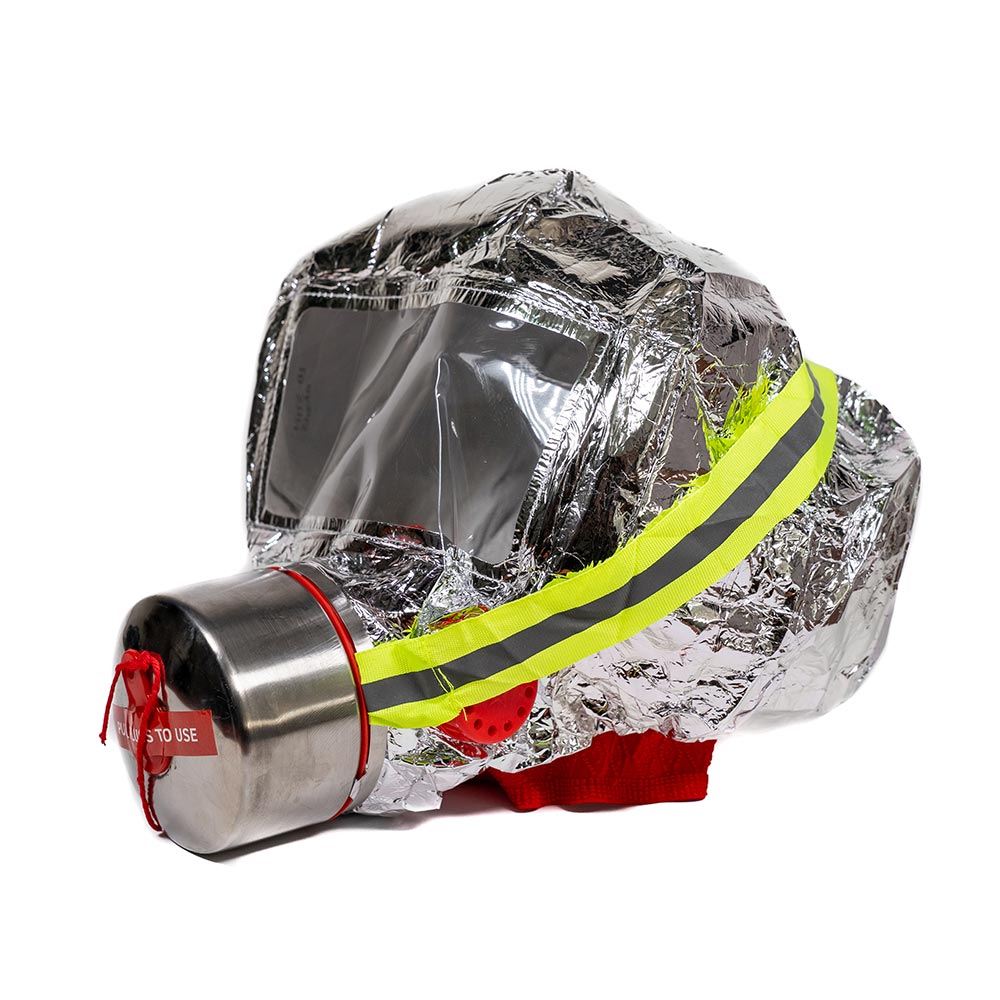
If possible, cover mouth with a cloth to avoid inhaling smoke and gases.

Close doors in each room after escaping to delay the spread of the fire.

If in a room with a closed door:

  • If smoke is pouring in around the bottom of the door or it feels hot, keep the door closed.
  • Open a window to escape or for fresh air while awaiting rescue.
  • If there is no smoke at the bottom or top and the door is not hot, then open the door slowly.
  • If there is too much smoke or fire in the hall, slam the door shut.

Call the fire department from a location outside the house.

After

Give first aid where appropriate.
Seriously injured or burned victims should be transported to professional medical help immediately.

Stay out of damage buildings.
Return home only when local fire authorities say it is safe.

Look for structural damage.

Discard food that has been exposed to heat, smoke, or soot.

Contact insurance agent.
Don't discard damaged goods until after an inventory has been taken. Save receipts for money relating to fire loss.

Heating Devices

Heating devices such as portable heaters, wood stoves, and fireplaces demand safe operation. Use portable heaters in well-ventilated rooms only. Refuel kerosene heaters outdoors only. Have chimneys and wood stoves cleaned annually. Buy only approved heaters and follow the manufacturers' directions.

Smoke Detectors

Smoke detectors more than double the chance of surviving a fire. Smoke detectors sense abnormal amounts of smoke or invisible combustion gases in the air. They can detect both smoldering and burning fires. At least one smoke detector should be installed on every level of a structure. Test the smoke detectors each month and replace the batteries at least once a year. Purchase smoke detectors labeled by the Underwriter's Laboratories (UL) or Factory Mutual (FM).

The United States has a severe fire problem, more so than is generally perceived. Nationally, there are millions of fires, thousands of deaths, tens of thousands of injuries, and billions of dollar loss - which makes the U.S. fire problem one of great national importance. Between 1994 and 2003, an average of 4,060 Americans lost their lives and another 22,650 were injured annually as the result of fire. These averages do not reflect the events of September 11, 2001. Thanks to the Federal Emergency Management Agency for the above information. We at Emergency Essentials recognize that loss of life and property in a fire can be significantly reduced with a better educated public—particularly regarding the lifesaving advantages of using and maintaining smoke detectors.
Home |  Group Specials |  Customer Service |  Retail Stores |  View our Return Policy  
Shipping Rates |  Contact Us |  About Us |  FAQs |  Site Map |  Related Links

Copyright 2008 Emergency Essentials ®
653 North 1500 West, Orem, UT 84057. 1-800-999-1863


Note: Supplies may be limited and prices are subject to change without notice.
Emergency Essentials, Inc. has been dedicated to helping people be prepared for an emergency or disaster for over 20 years. Our emergency products and emergency preparedness information have been a valuable resource to thousands of people as they have created their own emergency preparedness plans.

Emergency Essentials can help with your emergency preparedness plan in the categories of food storage, water storage, water filtration, camping equipment, first aid kits, emergency communication, emergency warmth, MRE (Meals Ready to Eat) supplies, and more; basically almost anything you would need for emergency preparedness.

Our wide variety of long-term food storage products, consisting of freeze-dried foods, dehydrated food, and MREs (Meals Ready to Eat) can help you build and maintain your food storage for when a disaster or emergency occurs. Our food storage is packed in #10 cans, with either oxygen absorbers or nitrogen flushed, for maximum shelf life to provide nutrition and great taste in the event of an emergency. At Emergency Essentials you can also find food storage recipes to help rotate your freeze dried and dehydrated foods in your emergency food supply. You can also find pre-made freeze dried foods in Mountain House pouches, which are excellent to have in a 72-hour emergency kit or just to take with you while camping.

Our popular emergency kit product line is another way we have helped people prepare. In fact, our 72-hour emergency kits have been featured in the Wall Street Journal. We have emergency kits for your home, auto, school, or office. In addition to finding our pre-assembled 72-hour emergency kits, you can also make your own emergency kit by purchasing our individual emergency supplies. You can also find our large supply of well-stocked first aid kits.

Camping supplies are complimentary products to emergency preparedness. From tents and backpacks to sleeping bags, water filters and water purifiers; we have a wide selection of camping products to help you with your emergency shelter, water storage, water filtration, and outdoor adventures.

Emergency Essentials is committed to help you meet your emergency preparedness goals. We are dedicated to helping people prepare and we look forward to working with you.