
Quick Summary:
Most families waste money on emergency food because they lack a simple rotation system.
#10 cans make rotation easier because you use exactly what you need, while the rest stays preserved for years.
You’ll discover the simplest way to use your emergency food in this article.
Table of Contents
- Why Do We Waste So Much Food?
- What Is Food Rotation (And Why Does It Matter)?
- How Do You Actually Rotate Emergency Food?
- How Often Should You Check Your Supplies?
- The Biggest Mistake Everyone Makes
Why Do We Waste So Much Food?
According to the USDA, Americans waste 30-40% of their food supply. And emergency food storage? It's even worse, because families treat it like a museum exhibit—look but don't touch.
The Three Reasons Food Storage Goes to Waste
You stored food you don't actually eat
Those 50-pound bags of wheat berries seemed like a great deal. But if you've never cooked with them in normal life, you won't suddenly start during an emergency.
You treated it as "emergency only"
When you label something "emergency food," your brain creates a psychological barrier. So it sits. And sits. And eventually expires—unused and wasted.
You had no system
You bought the food, put it on a shelf, and... then what? Without a clear plan for checking dates and using older items first, even the best intentions fall apart.
What Is Food Rotation (And Why Does It Matter)?
Food rotation means using your oldest stored food first and replacing it with fresh supplies. Think of it as a continuous cycle: use, replace, repeat.
It's the same principle grocery stores use—new milk goes in back, older cartons get pulled forward. That's FIFO (First In, First Out), and your pantry should work the same way. We’ll show you how to do that properly in this article.
Why This Actually Matters
You avoid throwing money away
When food expires before you use it, you're literally tossing cash in the trash. As you’re about to see, there’s a better alternative.
You ensure nutrition when you need it
Regular rotation means your family gets the nutrients they need when it matters most.
You gain real peace of mind
There's a big difference between "I have food somewhere in the basement" and "I know exactly what I have, it's fresh, and I've cooked with it before."
How Do You Actually Rotate Emergency Food?

Use the FIFO Method
First In, First Out. New items go to the back. When you need something, grab from the front. This one habit prevents most rotation problems.
Label Everything with Bold Dates
Those tiny printed expiration dates are nearly impossible to read. Grab a Sharpie and write the date in large numbers right on the can.
Organize by Category
Store similar items together—all beans in one spot, all tomato products together, proteins in another area. This makes checks fast and prevents you from buying duplicates.
Integrate into Regular Meal Planning
If you’re gonna remember ONE THING from this article, let it be this: use your emergency food in everyday cooking.
Plan one or two meals per week using items from your supply. The families who succeed don't treat emergency food as separate—they treat it as an extension of their regular pantry.
Here's what this looks like in practice:
Monday breakfast: Use your Freeze-Dried Strawberry Slices on oatmeal or yogurt. The kids love them, and one can lasts for weeks of breakfasts. Add "replace strawberries" to your shopping list.
Tuesday dinner: Making stir-fry? Toss in Freeze-Dried Broccoli and Freeze-Dried Mushroom Slices. They rehydrate in minutes and taste fresh—no wilted vegetables or trips to the store.
Wednesday lunch: Heat up soup and add Freeze-Dried Chicken for extra protein. One can gives you weeks of hearty lunches.
Thursday dinner: Taco night using Freeze-Dried Beef Crumbles instead of running to the store for ground beef. Your family won't taste the difference, and you've just rotated a key protein source.
Weekend baking: Use Fortified Nonfat Dry Milk in pancakes, biscuits, or bread. One can replaces multiple grocery store milk runs.
Why #10 Cans Make This Easier
Here's what most people don't realize: #10 cans actually solve many rotation headaches.
With a 50-pound bag of rice, you're committed to storing and rotating the entire amount. But with #10 cans, you open one, use what you need, and reseal it. The rest stays preserved for years—not days or weeks.
Fresh produce spoils. Regular canned vegetables lose quality after 2-3 years. But #10 cans of freeze-dried foods maintain quality for 25-30 years, giving you flexibility in your rotation schedule.
The beauty of staples in #10 cans: Items like White Rice and Pinto Beans give you the building blocks for countless meals. Open one can of Dehydrated Chopped Onions, and you've got the base for soups, stews, and casseroles for months. These aren't "emergency only" foods—they're practical cooking ingredients that happen to last decades.
For families who love comfort food: Our Honey Wheat Bread and Buttermilk Pancake Mix turn your emergency supplies into warm, fresh-baked favorites. Nothing feels more normal than homemade bread on a Tuesday evening.
How Often Should You Check Your Supplies?
Every 6 Months: The Big Check-In
Set a recurring calendar reminder twice a year. During this 15-minute check:
- Walk through your food storage area
- Check for expired or near-expiring items
- Move older items to the front
- Look for signs of pests or moisture damage
- Note what needs replacing soon
Monthly: The Quick Glance (5 minutes)
- Are newer items still in back?
- Anything that should move to your regular pantry for quick use?
- What needs to go on your shopping list?
Every Time You Shop: The Natural Habit
- New canned goods go behind old ones
- Check if any emergency items should be used this week
- Replace anything you used from emergency storage
Once this becomes a habit, you barely think about it.
The Biggest Mistake Everyone Makes
The same mistake comes up again and again: storing food you would never eat in regular life.
The Golden Rule: Store What You Eat, Eat What You Store
If your family loves pasta, stock pasta. If they hate lima beans, skip them—even if they're on sale. The best emergency food supply is built around meals your family already enjoys. That way, rotation happens naturally.
This is why items like Freeze-Dried Cinnamon Apple Slices work so well—they're snacks your kids will actually ask for. And proteins like Freeze-Dried Beef Dices and our Whole Egg Powder slot seamlessly into recipes you're already making.
Other Mistakes to Avoid
-
Buying everything at once – Build gradually so rotation is easier and costs spread out
-
Forgetting to replace what you use – Your supply shrinks without you realizing it
- Not involving the whole family – Everyone should know the system and where things are
From Chore to Simple Habit

Food rotation doesn't have to be complicated. With a few simple habits, your emergency food becomes a living part of your household rather than a forgotten project.
Once this system is running, it gives you something money can't buy: genuine confidence that your family is prepared.
Ready to build a supply that works? Start with our #10 Can Collection or explore complete kits like the NEW 30-Day Emergency Food Kit that take the guesswork out of what to store.

15 comments
Robyn
Thank you, this is a excellent tutorial!! Most of it I already knew, but, it was a nice refresher!!
I am going to start using more of my freeze dried foods more regularly!! And actually make a homemade loaf of bread from the ones I’ve purchased from you!!
Debbie
My problem is I don’t know exactly how to use freeze dried beef crumbles or mushrooms or powdered milk or other items in my everyday recipes. I would like to know how to do it.
Abigail
Yes! Food rotation is easily looked over. Thanks for the reminder!
VN
Love that I have things that do not go bad and no waste:) I never throw milk away now. Thanks for the tips!
Anna
I appreciate this perspective. As someone new to preparedness and a parent of two, I realized I’m not as ready as I thought. Looking at my pantry now, we’d probably only last a month. I’m definitely lacking in long-term emergency food, but I’m sticking to the Golden Rule: Store what you eat and eat what you store. Great read!
Melanie
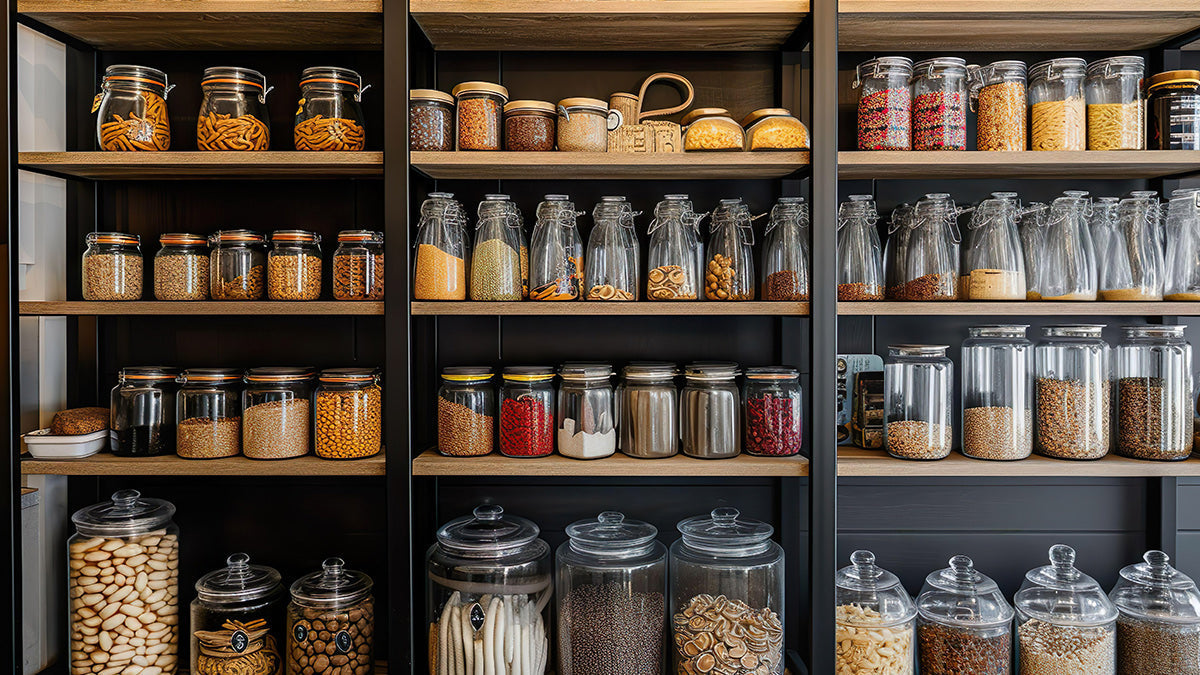
Wish my pantry was as organized as the one above. Great advice and concept to make sure no food is wasted!
Patti
Such great information. I especially like the daily dinners that are listed. Big help!!!!
Jessica
There are some great tips here that I have noted. It’s bad enough to stress in a crisis, but to have to worry about the necessities would make things even worse.
Jacqueline
I have always used the FIFO method while adding to my stockpile, and it makes life so much easier!
Danyelle
Thank you for this amazing info, I have never thought to write out the dates myself with the sharpie! Rotation is definitely key! & so many products look amazing, I can’t wait to try the onions!
Austin
I love this article! My family for about the last 6 months have been making a dinner once a week completely out of what we have in our stored food. It’s been great in helping us know what we need more of or even less of and what we like the best. It’s been a great way for us to rotate through our supplies without having to throw things away.
Sharon
Super appreciate the tips and info provided in these blogs. We have been making small changes and improvements to our preparedness plan that have really added up. Keep up the great work!
MidWestMOM91
Love the focus on actually using stored food instead of saving it “for someday.” Rotating items into everyday meals makes preparedness realistic and keeps supplies fresh and familiar.
MJ
Rotating emergency items into the weekly plan is so often forgotten. Great tip.
Catherine
As a person who is newer to preparedness, I can say that actively preparing really has provided me confidence and peace of mind. I feel more in control of mine and my family’s future.