
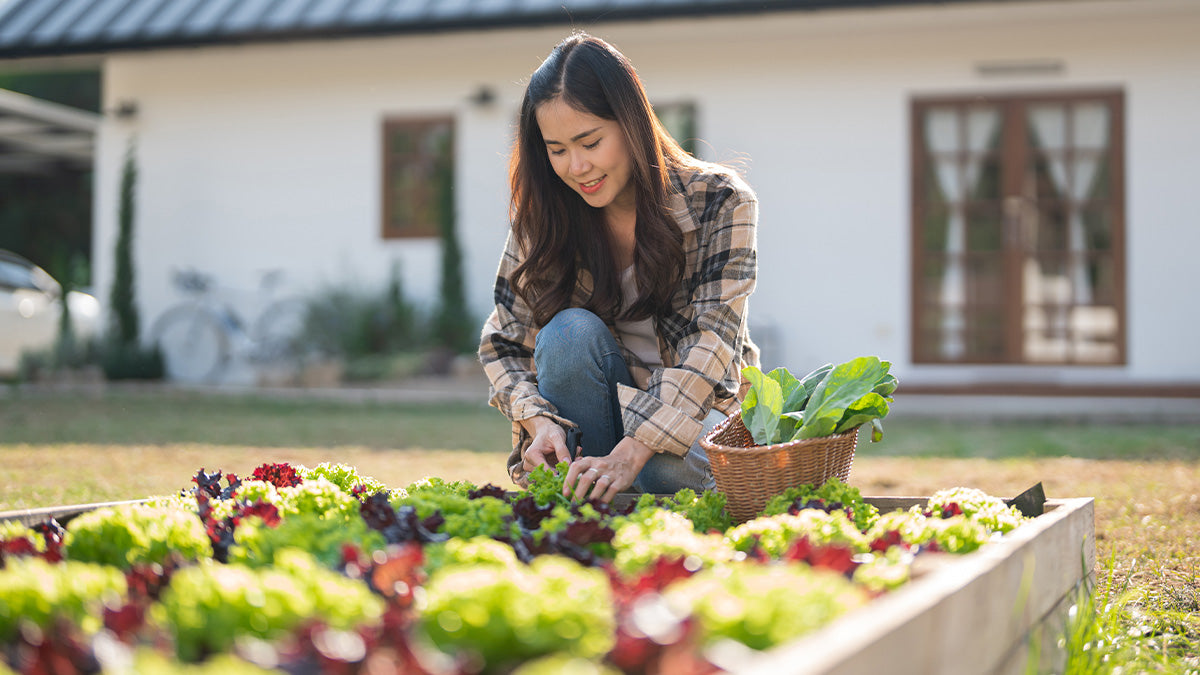
If you’ve never grown a garden, getting started can be intimidating.
You’re probably stuck wondering, “What do I plant? Where do I plant it? What if everything I plant shrivels up and dies?”
But you see, that’s just the thing: there’s no better way to get that green thumb than by simply getting started!
While gardening is a tranquil and rewarding hobby for many, it used to be a necessary survival skill. If your crops weren’t coming up through the ground, you’d go hungry all winter long!
But things have changed. We get our food from grocery stores, and that food comes from all over the world.
Though food production and distribution has changed drastically over the years, these systems, while convenient, are not entirely reliable. Knowing how to grow your own food is the secret to sidestepping a catastrophe of widespread food scarcity and contamination!
Still wondering what to plant and where to plant it? Keep reading to find out which vegetables are best for first-time food growers!

Bush Beans
Bush beans are a kind of bean that grows on a bush. Snap beans, like green beans; shell beans, like lima beans or edamame; and dry beans, like pinto beans and black beans can all be grown as bush beans.
These bushes do not need support to stand on their own, making them easier to maintain compared to climbing beans, which need a trellis or fence to support their growth.
Bush beans also mature more quickly than climbing beans, making them the perfect pick for an impatient, first-time planter!
Planting ‘n’ Picking
- Plant seeds 1–2 inches deep.
- Plant 2–3 inches from other bush bean seeds.
- Plant in rows 18–30 inches apart.
- Plant in a spot that gets at least 8 hours of full sun every day.
- Ready to harvest in 50–60 days!
Perks for First-Time Planters
- Since bush beans are ripe for picking all at once, you’ll get a lot of beans from every harvest.
- Bush beans are a top candidate for the canning process. Eat ‘em any season all year long!
- Small outdoor space? Bush beans grow well in planters! A container at least 8 inches deep is plenty for this plant.

Cherry Tomatoes
While the great debate about whether tomatoes are fruits or vegetables rages on, we’ll call ‘em a vegetable for the sake of this article!
Tomatoes of all varieties are classified as either determinate or indeterminate. Determinate varieties stop growing at a certain height, produce tomatoes all at once, then complete their life span. Indeterminate varieties continue to grow and produce tomatoes throughout the season, living until the cold kills them.
Cherry tomatoes are usually indeterminate, meaning a whole lotta tomatoes will be heading your way if you add ‘em to your garden!
Planting ‘n’ Picking
- Plant transplants so that ⅔ of each plant is buried.
- Plant in containers at least 12 inches deep.
- Plant 3 feet from other transplants.
- Plant in a spot that gets 6–8 hours of sun every day.
- Add a tomato stake or cage to support growth and protect tomatoes.
- Ready to harvest in 55–70 days!
Perks for First-Time Planters
- Cherry tomatoes are much easier to grow from starters or transplants rather than seeds. This expedites the waiting game by a couple of weeks!
- Got a patio, balcony, or deck? Since cherry tomatoes thrive in containers, this plant is perfect for yard-free folks!
- Cherry tomatoes benefit from a heavy weekly watering as opposed to a light daily sprinkling. This watering routine is an easy adjustment for gardening greenies!

Lettuce
Lettuce is one of the easiest vegetables to grow in a garden! There are various varieties of lettuce to choose from, too: butterhead, crisphead, romaine, and loose leaf, to name a few.
Taking up little space, lettuce can be planted in rows in the ground, in raised garden beds, and in containers.
Plus, because it is both a short and shallow-growing plant, it can be tucked around taller vegetable plants, and even planted as part of a flower garden!
The catch? Lettuce develops a bitter taste when grown during seasons with temperatures that exceed 80°F.
Planting ‘n’ Picking
- Plant seeds ⅛ – ¼ of an inch deep.
- Plant 2 inches from other lettuce seeds.
- Plant in rows 12–18 inches apart.
- Plant in a spot that gets 3–4 hours of sun every day. (Or 6–8 hours for faster growth!)
- Ready to harvest in 30–70 days! (Depends on the variety.)
Perks for First-Time Planters
- From seed to harvest, lettuce tends to grow quite quickly. For a fast reward, choose a loose-leaf lettuce! You’ll have little leafy greens in a month.
- Lettuce is one of the few vegetables that can take some shade, as long as it still gets some sun. This makes it easier to find a place to plant it!
- When it comes to lettuce, you’ll have a lot of flexibility with spacing. It depends almost entirely on how large you want your leafy greens to be.
- Speaking of leafy greens, did you know that you can eat lettuce leaves at any point in the growing process? You can cut the outer leaves throughout the season, or you can harvest a whole head of lettuce!
- Lettuce is another excellent contender for containers. If you don’t have a dedicated garden space, grab a couple of planters and create one on your patio!

Radishes
Fast and flexible, radishes are a beloved favorite for both novice and expert gardeners! Ready in just a few short weeks, radishes are a near-instant reward for all the effort and attention that goes into growing a garden.
You can plop these plants just about anywhere—in the ground, in pots or planters, among other vegetable plants, and in small spaces that need filling!
Radishes can also be planted at multiple points throughout the year, in the spring and the fall, offering a little flexibility for those with developing green thumbs.
Planting ‘n’ Picking
- Plant seeds ½ of an inch deep.
- Plant 1 inch from other radish seeds.
- Plant in rows 12 inches apart.
- Plant in a spot that gets at least 6 hours of full sun every day.
- Ready to harvest in 30–40 days!
Perks for First-Time Planters
- Radish seeds can be stored for as long as five years. If you bought ‘em and forget about ‘em, they still stand a chance!
- Radishes make wonderful companion plants, meaning they can be planted alongside other vegetables without harming them—in some cases, even helping them!
- You can plant radishes with cucumbers—another easy veggie for beginners—to repel cucumber beetles.
- Though radishes prefer a spot with full sun, they can be planted in a spot with partial sun and continue to grow.

Summer Squash
Summer squash is the classification for a kind of squash. All squash with a thin, edible skin can be called summer squash, including crookneck squash, pattypan squash, and zucchini.
Unlike winter squash, which includes squash like butternut and spaghetti, summer squash grow in more of a bush habit rather than a vining habit. This makes summer squash a more manageable vegetable for garden newbies.
Plus, summer squash come in a wide range of different colors, shapes, sizes, and flavors!
Planting ‘n’ Picking
- Plant seeds 1–1 ½ inches deep.
- Plant 2 feet from other summer squash seeds.
- Plant in rows or hills 3 feet apart.
- Plant in a spot that gets 6–10 hours of sun every day.
- Ready to harvest in 40–60 days!
Perks for First-Time Planters
- Summer squash are well-known for being extremely productive. Four to six plants can feed a family of four!
- In addition to growing a lot, summer squash also grow really quickly. Expect to check for vegetables to harvest every other day.
- If poor weather is keeping the bees from pollinating your summer squash, you can actually pollinate them on your own! There are both male and female flowers on the same plant, meaning they can be hand-pollinated if needed.
- Short on space? Summer squash can be grown vertically, as long as they’ve got the support of stakes or a trellis.

Simple Tips for Successful Seedlings
Here are some helpful hints to support you as you grow in your gardening journey:
- Know your zone. Refer to the USDA Plant Hardiness Zone Map to pinpoint the zone in which you live, then use that information to pick the most promising plants for your garden.
- Consider possible growing spots. You can grow vegetables in the ground, in raised garden beds, in pots and planters of various sizes, and even in repurposed containers, like old paint buckets. You can even grow smaller plants, like sprouts and herbs, in your kitchen!
- Test your soil quality. Plants need more than just water and sun; soil is important, too! Your soil is what will deliver nutrients to your vegetable plants, so knowing its chemical makeup will set you up for success. You can send in a soil sample to a cooperative extension service, or try an at-home testing method on your own.
- Learn about fertilizer. Most fertilizers contain some combination of the three main plant nutrients: nitrogen, phosphorous, and potassium. The fertilizer you need will depend on what your soil does and does not have, as well as your gardening goals.
- Choose strong seeds. High-quality seeds lead to high-quality vegetables! Open-pollinated, zone-friendly seeds are a top pick for first-timers. The Survival Seed Vault by Patriot Seeds contains 20 varieties of fruits and vegetables, including bush beans, lettuce, radishes, and summer squash!
- Commit to a consistent watering schedule. How much water your vegetable plants need, and how often, depends on each specific plant. Use that information to determine how and when to water them. Will you hand water, use a hose, or use some sort of drip or sprinkler system? Will you water early in the morning, late in the afternoon, or during the evening? Be sure to take rainwater into consideration, too.
- Invest in the right tools. Whether you plant in pots or the ground, you’ll need a lot of the same supplies: a hand shovel or hand trowel, hand cultivator, pruning shears, garden hose or watering can, gardening gloves, knee pads, and a cart or caddy to carry it all!
- Use an app. There are a number of apps designed to diagnose plant diseases and offer plant care tips. You can also use an app to simply track your garden’s progress! Some popular options include PictureThis, iNaturalist, and Planta.
- Befriend a gardener. As you make trips to your local nursery for seeds and supplies, get to know the gardeners who work there! They’re often hired specifically for their plant expertise. Take advantage of their knowledge!
- Skip the seeds. If you’re too eager to wait for garden-fresh food, or you simply got a late start to the planting season, consider planting starts or transplants instead of seeds. This will shave a few weeks off of the growing groove!
- Learn from each season. Keep an open mind! Accept that you won’t become an expert in a single season. Gardening involves a lot of trial and error, so enjoy the journey!
Are you already a seasoned gardener? What vegetables would you recommend for beginners? Drop your tips in a comment below!
Check in with The Essentials Blog each week for expert education, tips, and resources to make your shift to self-reliance as smooth as possible!
1 comment
Crisco
Thank you for the good info.i am retiring soon and looking forward to planting your Patriot seeds.i have some plants now,Cherry tomatoes, Bell peppers, Jalepenos,Tobacco peppers and cayenne peppers. I’m in South Louisiana and these all grow well out here.