
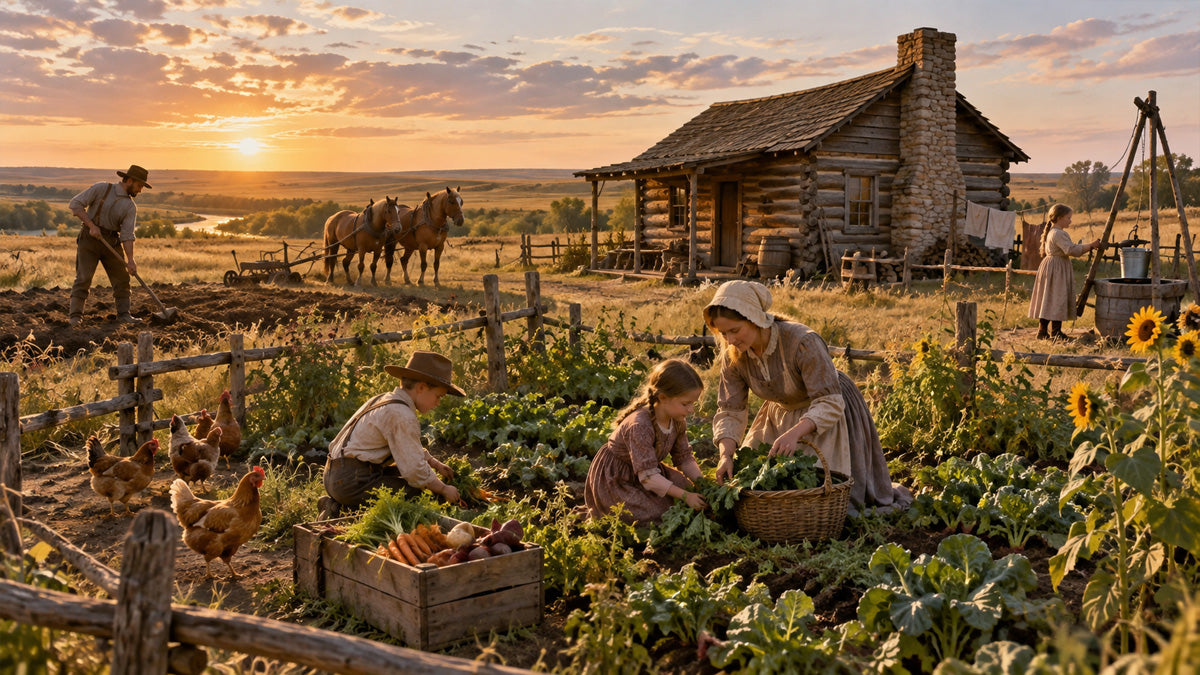
Living Like Laura Ingalls: How Pioneers Fed Families Without Grocery Stores
September is the season for fresh notebooks, jam-packed school schedules, and the long-awaited return of all things pumpkin spice!
But the start of September used to mean something more. Back in the nineteenth century, this month marked the time to harvest – then preserve – all fall crops before that first hard frost arrived.
Families spent hours upon hours and days upon days together, freeing up their fields and extending the life of their food to last them throughout the winter. They may have had a small market or so a couple miles from home, but even then, there were no late-night grocery runs or frozen pizzas waiting in the wings!
How well a household of folks ate – and how much variety landed on the table – depended heavily on the work they knocked out before the weather turned cold. (No pressure, right?)
Curious? Keep reading to take a closer look at the fall harvest frenzy and how it helped pioneers survive the winter season.

The Harvest Hustle
Once September rolled around, gardens and fields were often overflowing with produce. There were beans by the basketful, turnips and potatoes freshly picked from the soil, and squash tucked neatly under sprawling vines.
Pioneer families typically grew more than what they could eat before it went bad. And that wasn't by accident! They planted extra seeds every year because a big garden gave them more food to preserve for the winter ahead.
But growing all that food was only half the battle. The real challenge was ensuring it remained edible long after the garden ground froze over – when fresh food became much harder to come by.
For pioneer families, the plan for September was simple: eat what was fresh, preserve what wouldn't last, and stretch that hard-earned harvest across the harsh winter season.

Food Storage is a Science
When you picture historic food preservation, you might imagine a row of glass jars tucked away in a dim cellar. While charming and somewhat true, there's so much more to food storage than that!
The pioneers had plenty of food-saving tricks up their sleeves. A dependable winter pantry needed variety – and every method gave them yet another way to make their harvest last.
Here are a few ways families kept their food from going to waste:
- Drying: Removing moisture slowed spoilage and helped fruits, herbs, beans, and certain vegetables last longer.
- Pickling and brining: Cucumbers, cabbage, beans, and other vegetables could be preserved using vinegar, salt brine, or fermentation. Their tangy flavors helped perk up winter meals that would feel too repetitive otherwise!
- Sugaring: For a sweeter route, families turned seasonal fruit into jams, jellies, preserves, and syrups. High concentrations of sugar helped extend a fruit's life while offering a tasty reminder of summer!
- Canning and bottling: By the nineteenth century, sealed and heated containers offered another way to save seasonal foods. It helped keep seasonal produce useful well beyond the fall harvest.
- Root cellaring: Potatoes, turnips, squash, apples, and other crops could be stored in cool, dark spaces that slowed their deterioration.
A dependable pantry consisted of a mix of preserved foods. A family might dry apple slices, pickle cucumbers, store potatoes in the cellar, and hang bundled herbs near the kitchen.
Together, those foods afforded the household many more choices – and much more resilience – when winter arrived. Because once the gardens and fields were frozen, what they had preserved was all they had!

The Underground Advantage
Keeping food cool was one of the biggest challenges of the harvest season. Refrigeration didn't exist yet, so pioneer families turned to a dependable alternative: the earth itself!
Below ground, temperatures tend to stay steadier than they do above. This stability made a root cellar a huge advantage for households trying to make their harvest last. It was an all-natural, cool storage space – no electricity required!
A successful root cellar needed four things:
- Cool temperatures to slow decay.
- Darkness to limit sprouting and unwanted growth.
- Humidity to keep vegetables from drying out and shriveling.
- Consistency to avoid the damaging cycle of freezing and thawing.
In these conditions, crops could last for months! Potatoes, carrots, turnips, cabbage, and winter squash were especially ideal for root cellar storage.
But a root cellar wasn't a "set it and forget it" solution. Vegetables needed to be packed into crates or barrels and checked often – one soft potato or rotting turnip could spread to the food stored nearby! A little extra attention throughout the season helped protect the rest of the supply.
A well-managed root cellar gave pioneer families a massive advantage during the winter months: time.
When fresh produce was unavailable and snow blanketed the ground, a root cellar helped turn a fall harvest into filling meals that lasted long after the garden was gone.

An Old Idea as Relevant as Ever
Nowadays, most of us aren't attempting to survive the winter season from a single harvest. (Hallelujah!) Thanks to refrigeration, transportation networks, canned foods, and supermarkets, we have year-round access to options that pioneer families would be shocked to see today!
But the need for food storage hasn't completely disappeared.
While modern solutions are convenient, they are not entirely reliable. When a storm hits and closes the roads – or a power outage disrupts your routines – your shelves may get thinner than you ever expected!
That pioneer instinct still applies: preserve what you have while it's available, and keep multiple food-storage methods up your sleeve.
These days, that could look like:
- Drying herbs and fruits with a dehydrator.
- Learning canning techniques for seasonal produce.
- Keeping shelf-stable ingredients and meals in a cool, dry place.
- Using proper storage containers to protect food from moisture and pests.
- Buying plenty of extras when an essential food staple is affordable!
The food-storage tools and options of today make it easier than ever to extend the life of your food! The containers, dehydrators, canning supplies, and preserved foods may look different from the root cellar shelves and drying racks of the past, but the purpose is the same – and still as relevant as ever.
Learn From the Folks Before Us
Pioneer families had to preserve their harvest because they had few, if any, other opportunities for food.
Today, we have much more convenience – but the value of preparing for times ahead has not changed. A little food storage now means more comfort, flexibility, and peace of mind during disruptions later.
Check in with The Essentials Blog each week for expert education, tips, and resources to make your shift to self-reliance as smooth as possible!