

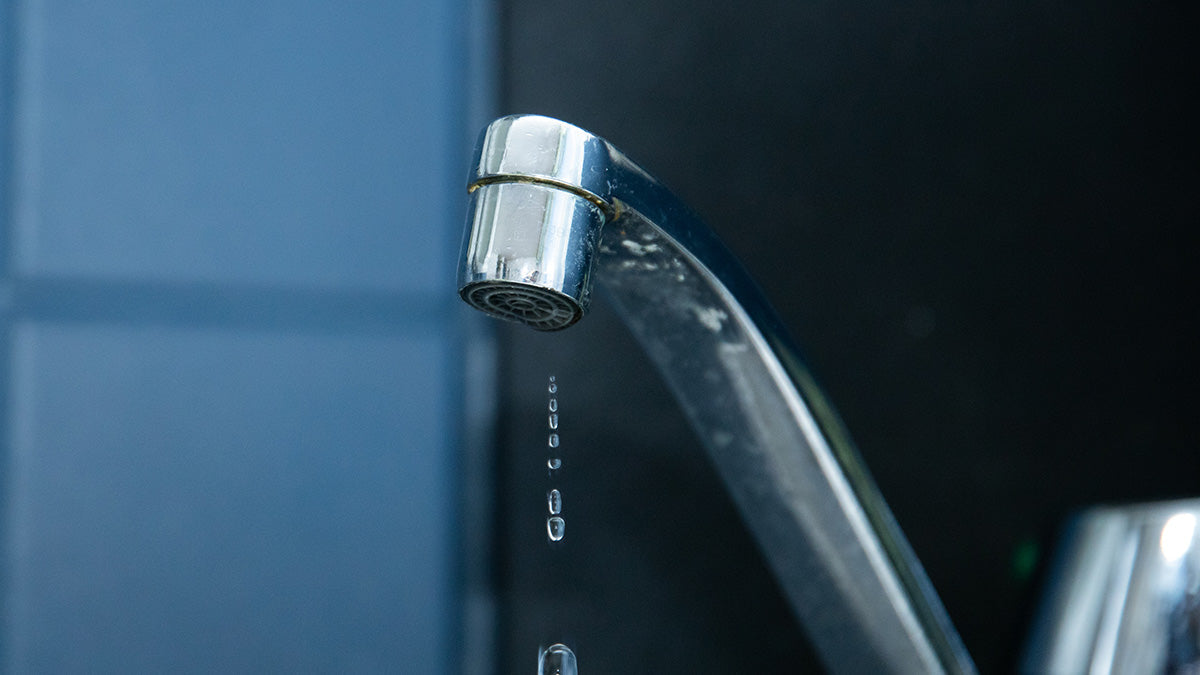
When the Well Runs Dry: Preparing for Municipal Water Weak Spots
In past posts, we've presented various survival scenarios, from planning an escape into your fully stocked cellar to formulating an evacuation from your home sweet home.
And while these possibilities are important to prepare for, the painful truth is this: most emergencies will happen in the safety of your own space!
Think about it: You stumble into the kitchen, grab a glass, and flip on the faucet, but all you hear is a raspy hiss.
Not only is your drinking water all dried up, but so is any water you might have needed to brew up a cup of coffee, brush your teeth, water your houseplants, or wash the dishes from last night's dinner.
At the simple turn of the tap, an ordinary day has quickly become a minor emergency!
No one ever thinks it'll happen to them – that is, until it does. If you're relying on public utilities in any capacity, then you're vulnerable to their sudden disruption, often without warning.
Since this is the case for most folks living in bustling cities and suburban neighborhoods, understanding these limitations is an important part of your emergency plan.
So, how do you prepare for this weak spot that seems out of your control? Keep reading to find out!

Why the Tap Taps Out
It sure is easy to go with the flow – until it stops!
Municipal water is transported to your home through a complex series of pipes, treatment facilities, storage tanks, and control systems.
The complexity of this municipal maze means that a problem can pop up at any point in the process, resulting in disruptions of all sorts:
- Broken water mains. Extreme temperatures, drastic temperature fluctuations, aging or damaged pipes, and construction projects can lead to unexpected leaks and breaks.
- Loss of electricity. Since water pumps and treatment facilities rely on power to run, a widespread or prolonged outage can cut off access to water – even if there is more than enough of it.
- Contamination. Microorganisms, chemical spills, and other hazards can trigger warnings to boil water before use, or worse – "Do Not Drink" or "Do Not Use" advisories!
- Cyberattacks. It might seem strange, but water systems face threats other than physical – digital threats should be considered, too. Just recently, in July of 2026, cyberattacks targeted and interfered with systems used to monitor and control water operations across multiple states!
It does not take a natural disaster to destroy your supply of drinking water. All it takes is one old pipe, a malfunctioning pump, one microorganism, or a surprise cyberattack.

Ways to Stay Afloat
While these risks might seem intimidating, there is a beacon of hope to consider: You can prepare for these possibilities!
It is widely recommended to start by storing at least one gallon of water per person, per day. But, taking into account all the essential uses for water – from drinking to cooking to sanitation – it is best to set aside closer to two gallons per person, per day.
Start Storing Right Now
Big, blue barrels that store hundreds of gallons of water are just not a realistic storage solution for most folks. Instead, start small! Something is better than nothing.
Look for food-grade containers that can be stacked inside closets, cupboards, pantries, and tight spaces, or that can be collapsed after use to preserve precious space.
You can also store water inside large, flexible bags, then tuck them away in unused areas, like an extra bathtub.
But if storage space is really limited, try stocking up on portable water pouches. They're small, lightweight, and can be packed into nooks and crannies as a backup plan!
Collect Tools to Treat Contamination
Begin building a collection of different filters, purifiers, and chemical solutions in order to treat your existing water supply – or any contaminated water you might encounter during an emergency.
Before buying, be sure to closely and carefully inspect product capabilities and directions.
However, in the event of an advisory to avoid drinking or even using municipal water, it might be best to fall back on your stored supply – just to be safe.
Catch It If You Can
When you hear about an impending storm, temperature drop, or scheduled system repair, make an effort to fill up those food-grade containers while the tap is still dripping!
You could also quickly fill up a bathtub, then use that water to wash dishes, clean clothes, and flush toilets.
This "store, treat, and capture" trifecta offers a strong framework for a flexible water supply plan without relying entirely on a stash of plastic jugs!

Don't Wait for the Dreaded Dry Hiss
You cannot prevent an aging pipe from bursting, a water pump from stopping, or a local advisory from spreading – but you can prevent the fallout from flailing about aimlessly in a water-related emergency!
Just start with a few days' worth of water, stored and ready to use the second disaster strikes. Then, slowly but surely expand your arsenal of water treatment solutions and tools.
Whether you have a sprawling storage room or a single spare shelf in the coat closet, every extra gallon counts!
Prepare now, before the last drop drains – then that dreaded dry hiss can remain nothing more than a minor inconvenience.
Check in with The Essentials Blog each week for expert education, tips, and resources to make your shift to self-reliance as smooth as possible!
Comments
You suggested to use food grade containers. With the concern about plastics, is there a danger in using these plastic containers to store water for a long time?